Why is hydration essential for the body?
Water representsapproximately 60% of an adult's body weight and conditions the proper functioning ofalmost all physiological processes. It is involved in thermal regulation, the transport of nutrients, the elimination of metabolic waste, and the maintenance of cellular osmotic pressure. A stable fluid balance is not just a question of comfort: it is a fundamental condition for the efficiency of the metabolism.
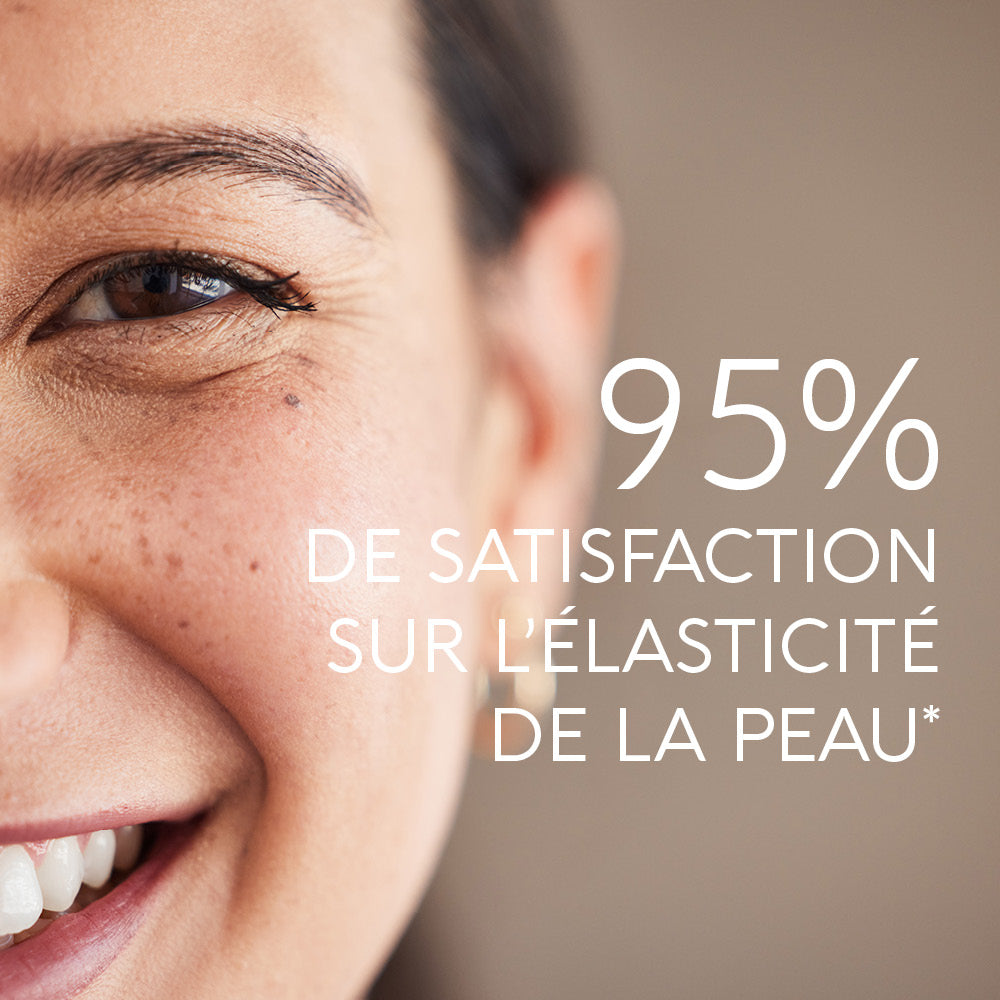
Regarding the skin, thehydration of the skindepends directly on the availability of water at the cellular level. The dermis, which contains the bulk of the extracellular matrix, requires a constant intake of fluids to maintain its structure, its elasticity, and its ability to retain water molecules. When this balance is broken, the first signs appear on the skin even before affecting internal organs.
What are the signs of a lack of hydration?
The signs of insufficient hydration are often underestimated becausethey remain discreet before becoming bothersome. The unexplained fatigue, difficulty concentrating, headaches at the end of the day, or a feeling of a dry mouth are early signals that the body sends when its fluid reserves are dwindling. These manifestations generally precede the visible effects on the skin.
On the cutaneous side, dehydrated skinmanifests as tightness, an irregular texture, a loss of suppleness, and a dull complexion that resists topical treatments. Cutaneous dehydration is not always synonymous with dry skin: it can affect all skin types as soon as the intake or retention of water becomes insufficient, notably under the effect of cold, heating, an unbalanced diet, or intense physical activity.
How can dietary supplements contribute to hydration?
A hydration dietary supplement acts internally, where topical treatments do not penetrate. By providing active ingredients that support the cellular capacity to bind and retain water, or that strengthen the skin barrier to limit transepidermal water loss, it complements what diet and water consumption alone are not always enough to ensure. The action is systemic: it benefits all tissues, not just the surface of the skin.
This type of skin dietary supplement acts on several mechanisms simultaneously: it can support the synthesis of structural molecules like hyaluronic acid, strengthen the integrity of the skin barrier via lipids or ceramides, or even optimize cellular water transport thanks to essential minerals. It is this multi-level action that distinguishes a nutritional approach from a classic external treatment.
The most used active ingredients in dietary supplements for hydration
The hyaluronic acidis arguably the most documented active ingredient in this field. Naturally present in the dermis, it is capable of binding up to a thousand times its weight in water,contributing directly to the maintenance of deep hydration and the elasticity of the skin. Taken orally in hydrolyzed form, it is absorbed in the intestine and redistributed to the tissues that need it most.
Aloe vera, hydrolyzed marine collagen, B-group vitamins, and certain minerals like zinc are also among the most used active ingredients in formulas oriented toward cellular hydration. Each acts on a distinct mechanism: marine collagen supports the dermal structure and the ability of connective tissue to retain water, while aloe vera provides polysaccharides that contribute to skin comfort and the suppleness of the skin.
Skin hydration: which nutrients to favor?
To specifically target skin hydration, certain nutrients are of particular interest. Oral hyaluronic acid is the leader, but its effectiveness is potentiated when associated with cofactors like vitamin C, which is essential for the synthesis of endogenous collagen. This synergy of active ingredients improves skin density and comfort in a measurable way, as shown by several controlled studies conducted over periods of eight to twelve weeks.
Theessential fatty acids, notably omega-3and omega-6, play a structural role in the composition of cutaneous cell membranes and in the quality of the superficial lipid film. Associated with antioxidants like vitamin E or selenium, they strengthen the resistance of the skin barrier against external aggressions, thus limiting cutaneous dryness and transepidermal water loss.
Hydration dietary supplement: for whom?
Hydration dietary supplements are not addressed exclusively to dry or mature skin. Anyoneexposed to recurring dehydrating factors, whether it be air conditioning, air travel, a polluted urban environment, or an undiversified diet, can benefit from targeted nutritional support. The question is not age or skin type, but exposure to factors that deplete the body's fluid reserves.
The profiles most concerned remain, however, people whose skin shows visible signs of persistent dehydration despite regular topical hydration, women going through menopause whose skin gradually loses its ability to synthesize hyaluronic acid, and athletes subjected to significant fluid and mineral losses. For each of these profiles, the nutritional response differs, which justifies a selection of active ingredients adapted to real needs.
Hydration and physical activity: what is the benefit of dietary supplements?
Physical exercise intensifies fluid losses significantly, not only via perspiration but also by increasing the respiratory rate. These losses lead to a drop in the concentration of circulating electrolytes, notably sodium, potassium, and magnesium, which are essential for maintaining intracellular fluid balance and proper muscle function. Even a modest deficit in these essential minerals can affect performance and recovery.
A hydration dietary supplement formulated for athletes generally integrates these electrolytes in balanced proportions, to which can be added active ingredients supporting tissue recovery and the reduction of oxidative stress induced by exertion. The goal is not to replace basic fluid intake, but to allow the consumed water to be better used by the cells, by rapidly restoring the ionic gradients disturbed by exertion.
How to choose a dietary supplement for hydration?
Choosing a relevant hydration dietary supplement involves starting fromyour real need: is it visible cutaneous dryness, fatigue linked to a mineral deficit, skin that reacts to seasonal variations, or support in the context of regular sports practice? The answer will condition the choice of priority active ingredients. A formula centered on hyaluronic acid and marine collagenmeets a structural cutaneous need; a formula rich in electrolytes and magnesium is addressed more to the overall fluid balance of the body.
Beyond the active ingredients, the quality of manufacturing and the galenic form directly influence bioavailability and therefore the felt effectiveness. Liquid forms or powders to be diluted allow for generally faster absorption than capsules, particularly for minerals. The concentration of active ingredients, their standardization, and the presence of synergistic cofactors are determining criteria, often more revealing than the simple list of ingredients displayed on the front.
Hydration, minerals, and electrolytes: what role in the body's balance?
Essential minerals, and more particularly electrolytes, ensure the regulation of water exchanges between the body's compartments. Sodium regulates extracellular volume, potassiumconditions intracellular hydration, and magnesium is involved in more than 300 enzymatic reactions linked to energy production and ionic transport. Without this balance, the ingested water cannot be correctly used by the cells, which explains why abundant hydration is not always enough to correct deep dehydration.
In the context of a modern diet often depleted in minerals due to food processing methods, an electrolyte deficit can settle in silently. A dietary supplement providing a balanced spectrum of mineralscontributes to restoring these ionic gradients, thus improving effective cellular hydration rather than just the total body water volume. This is a fundamental distinction between quantitative hydration and functional hydration.
How to integrate a hydration dietary supplement into your daily routine?
The effectiveness of a hydration dietary supplement relies in large part on the regularity of the intake. Active ingredients like hyaluronic acid or electrolytes act in a cumulative way: their effects are only perceptible after several weeks of continuous use, generally between four and eight weeks depending on the profile. A daily intake, ideally at a fixed time, promotes adherence and optimizes the regularity of the plasma levels of the active ingredients.
Integration into the daily routine is facilitated bythe choice of a form adapted to one's lifestyle. A powder formula to be diluted can replace or complement the morning glass of water, while capsules fit naturally into an existing supplementation routine. It is advised to associate the intake of the supplement with sufficient fluid consumption throughout the day, because hydrophilic active ingredients like hyaluronic acid exert their full potential in the presence of adequate body water.
FAQ: Everything to know about dietary supplements for hydration
What is a dietary supplement for hydration?
A hydration dietary supplement is a nutritional formula designed to support the body's ability to maintain an optimal fluid balance. It provides active ingredients like hyaluronic acid, electrolytes, or certain essential minerals that strengthen water retention at the cellular and tissue level, in addition to a balanced diet and sufficient fluid consumption.
Which ingredients promote the body's hydration?
The most documented active ingredients are oral hyaluronic acid, hydrolyzed marine collagen, aloe vera, and certain B-group vitamins. Each acts on a distinct mechanism: water binding in tissues, ionic transport, strengthening the skin barrier, or supporting the dermal matrix.
Can a dietary supplement help hydrate the skin?
Yes, internally. Certain active ingredients, notably hyaluronic acid and marine collagen, act directly on the structure and hydrating capacity of the dermis. Clinical studies have shown a measurable improvement in skin hydration, its elasticity, and its cutaneous comfort after eight to twelve weeks of regular intake, independently of the topical treatments applied in parallel.
What is the difference between drinking water and taking a hydration dietary supplement?
Drinking water increases the overall fluid volume, but does not guarantee that this water is correctly used at the cellular level. A hydration dietary supplement provides the cofactors necessary for this use: electrolytes for ionic exchanges, hyaluronic acid for tissue retention, and minerals for the activation of transport mechanisms. Both approaches are complementary, not substitutable.
How long does it take to feel the effects of a hydration dietary supplement?
The first effects on cutaneous comfort and the feeling of general well-being are generally perceptiblebetween three and four weeks of regular intake. The structural effects, notably on the skin's elasticityand deep hydration, set in gradually oversix to twelve weeks. Regularity of intake is the determining factor for effectiveness.
Are dietary supplements for hydration suitable for athletes?
Yes, and their benefit is particularly marked in this context. Physical effort generates significant fluid and mineral losses that cannot always be compensated by diet alone. A formula adapted to athletes will integrate a balanced electrolyte profile, potentially complemented by active ingredients supporting recovery and resistance to oxidative stress induced by exercise.
Can you take a hydration dietary supplement all year round?
The intake can becontinuous or sequential depending on needs. Certain profiles, like chronically dehydrated skin or people practicing regular physical activity, benefit from continuous supplementation. Others will prefer targeted periods, in winter to counter cutaneous dryness linked to cold and heating, or in summer during solar exposure and increased perspiration.
What factors promote dehydration?
Dehydration can be promoted by environmental factorslike cold, heat, wind, or air conditioning, but also by dietary habits poor in high-water-content fruits and vegetables, insufficient consumption of liquids, intense sports practice, certain diuretic medications, or even cutaneous aging which gradually reduces the dermis's ability to synthesize and retain hyaluronic acid.
How to optimize your hydration on a daily basis?
Optimal hydration relies on a combination of factors: regular fluid intake distributed throughout the day, a diet rich in vegetables and fruits with a high water content, a reduction of evaporation factors like alcohol or excess caffeine, and, if necessary, a hydration dietary supplement targeted at identified needs. The application of adapted topical treatments comes as a complement, but cannot replace systemic hydration.
 Skin
 Hair & Nails
 Sun Care
 Slimming
 Health
 K-Biocyte
 Clinical