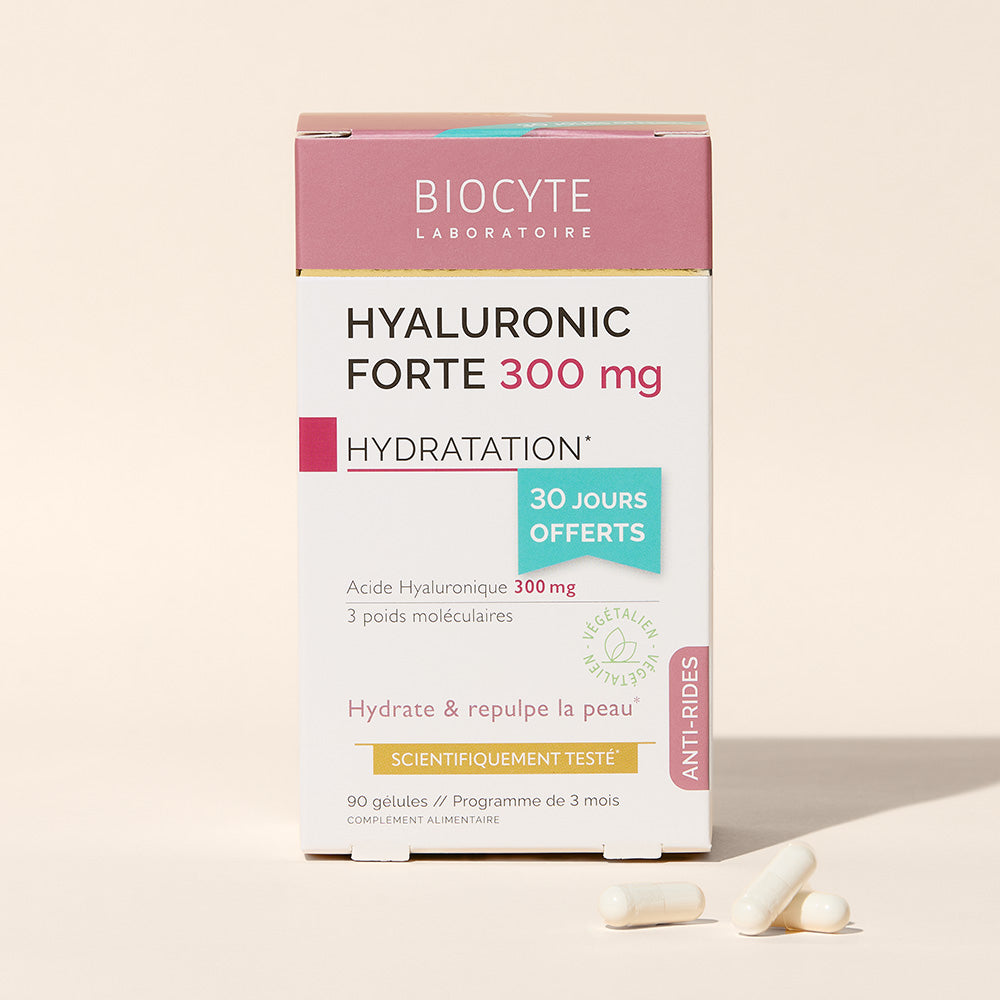
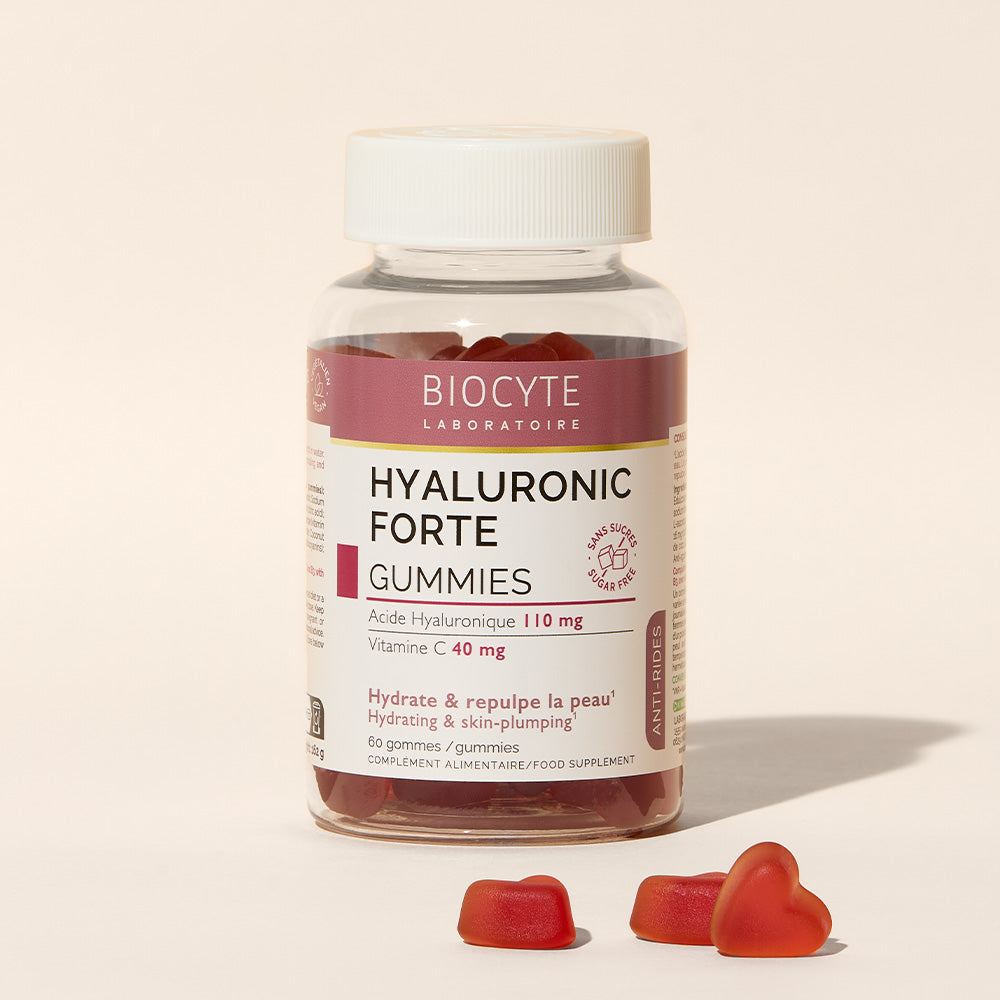
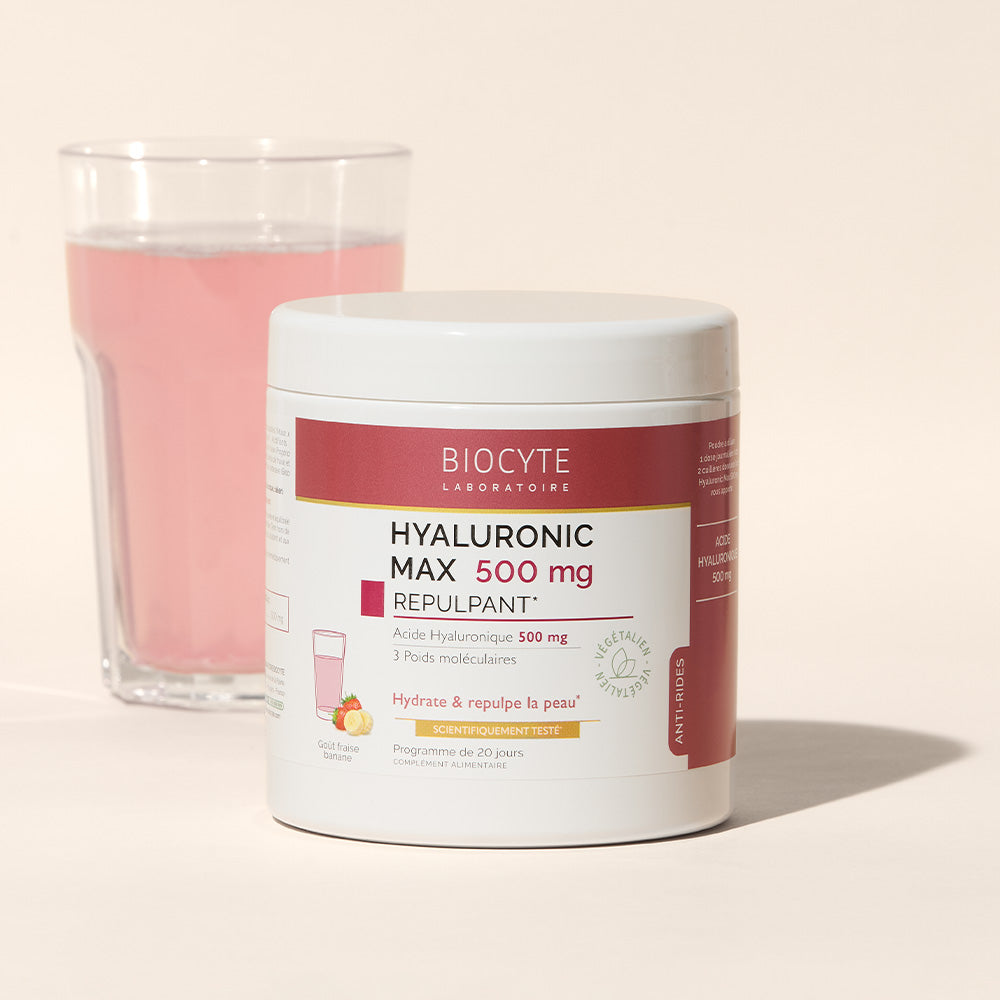
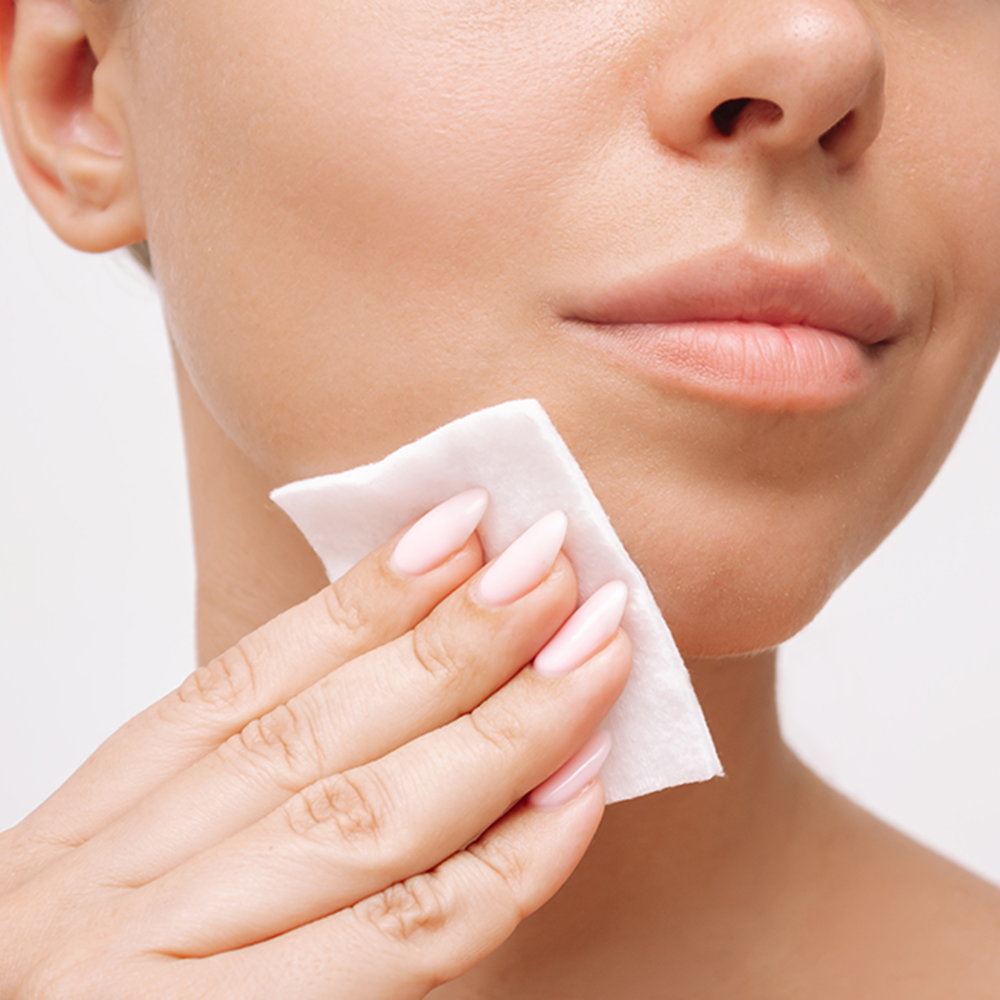
Facial wrinklesdo not start on the surface: they reflect changes that first occur in the dermis, where collagen, elastin, and hyaluronic acid are found. This is precisely where the benefit of an anti-wrinkle dietary supplementlies: to provide the skin, from within, with targeted biomolecular actives that contribute to its structure. Collagen, hyaluronic acid, vitamin C: discover how these actives work, what the studies show, and how to choose the formula right for your skin.
Why does the skin wrinkle with age?
Skin agingresults from two overlapping dynamics. The first is intrinsic: it depends on time, genetics, and hormonal changes. The second is extrinsic: UV exposure, pollution, smoking, diet, or lack of sleep accelerate the appearance of visible signs.
Collagen and elastin: a weakening framework
Collagen accounts for about 75% of the skin's dry weight. It forms a network of fibers that gives the dermis its density and firmness. From your twenties, its production gradually slows down, while existing fibers fragment. Elastin follows the same path. As a result, the skin's firmnessdecreases, the skin's elasticityis reduced, and expression lines eventually become permanent.
Hydration, oxidative stress, glycation: the other mechanisms
Other processes come into play. First, the skin's hyaluronic acid content, a molecule capable of binding a large amount of water, decreases with age: the skin's hydrationbecomes less stable. In addition, oxidative stress, amplified by UV rays and pollution, damages the supporting fibers. Finally, glycation, that is, the binding of sugars to collagen fibers, makes them rigid and less functional.
Fine lines or deep wrinkles: different realities depending on the skin
Fine linesoften appear first, especially on thin and dry skin. They are largely linked to surface dehydration. Deep wrinkles, on the other hand, reflect a deeper remodeling of the dermis. Thick skin generally shows them later, but with more visible sagging. On mature skin, the drop in estrogen around menopause is accompanied by a rapid decrease in skin collagen: the loss of density then becomes the dominant sign.
How does a dietary supplement act on wrinkles from within?
This is the whole principle of nutricosmetics: to act on the skin through nutrition. A cream essentially acts on the epidermis. The dermis, on the other hand, is supplied by the blood circulation. An anti-wrinkle dietary supplementtherefore takes this route to reach the layers where the skin's structure is determined.
The journey of an active ingredient, from the intestine to the dermis
Take the example of hydrolyzed collagen. After ingestion, it is absorbed in the form of small peptides, some of which, such as prolyl-hydroxyproline, are found in the blood and then in the skin tissues. Laboratory studies suggest that these peptides act as signals for fibroblasts, the cells that produce collagen, elastin, and hyaluronic acid. In other words, the intake is not limited to providing "bricks": it stimulates the activity of the cells that build the dermis.
A progressive action, built to last
The dermis renews itself slowly. An anti-wrinkle dietary supplementtherefore does not produce an immediate effect: it is part of a multi-week nutricosmetic program. This holistic approach gains relevance when accompanied by daily photoprotection, a diet rich in antioxidantsand sufficient sleep.
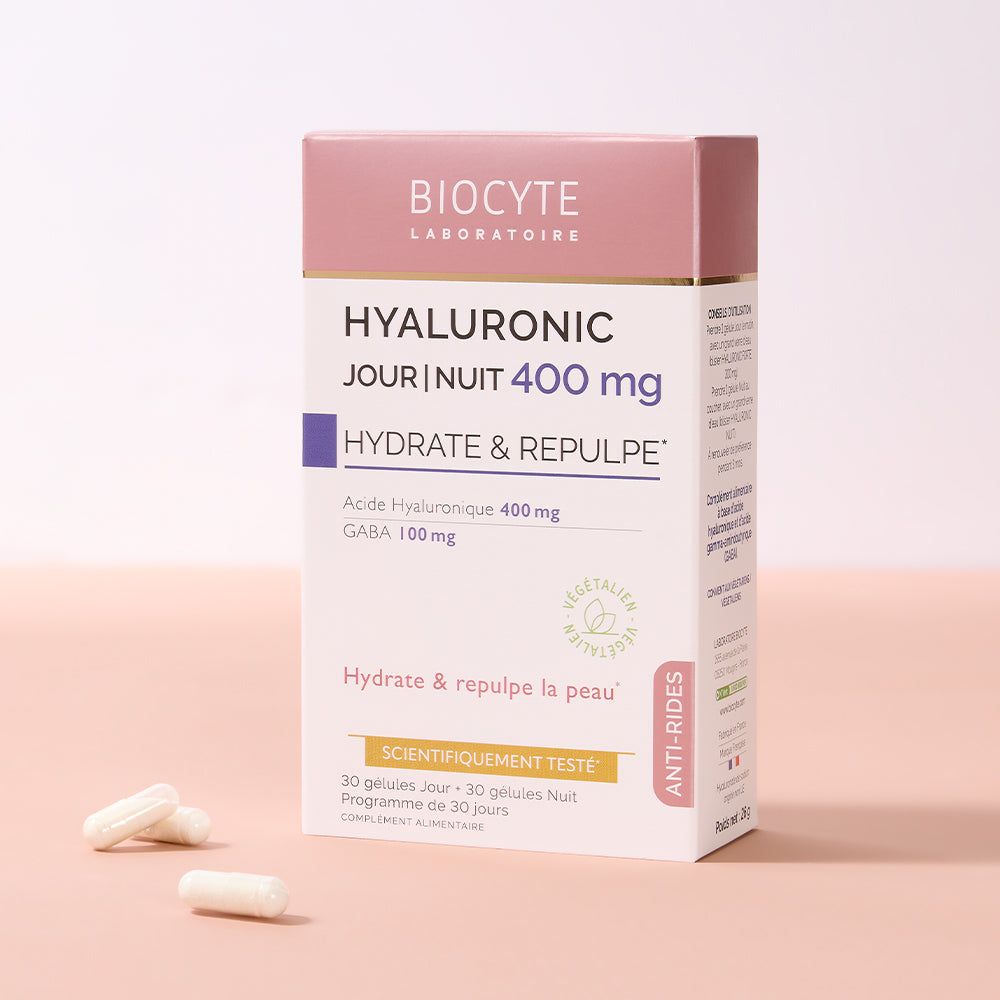
The first French nutricosmetic laboratory, Biocyte was a pioneer of oral hyaluronic acid in 2007, then collagen in 2010. This early start today fuels a constant requirement: selection of actives, dosages based on the literature, and bioavailability.
Collagen, hyaluronic acid, vitamin C: the key actives in an anti-wrinkle supplement
Not all actives are equal when it comes to the signs of aging. The effectiveness of an anti-wrinkle dietary supplement depends first on the choice of documented actives, present in doses consistent with the scientific literature. Three of them structure most formulas: hydrolyzed collagen, hyaluronic acid, and vitamin C. They are often complemented by antioxidants, and each acts on a specific mechanism of skin aging.
Hydrolyzed collagen
Hydrolyzed collagenis the most studied active in nutricosmetics. In a randomized placebo-controlled trial, 114 women aged 45 to 65 took 2.5 g per day of collagen peptides for 8 weeks: the volume of wrinkles around the eyes decreased significantly compared to the placebo group (Proksch et al., 2014).
Marine or bovine collagen? The origin matters less than the quality of the process. The degree of hydrolysis, the size of the peptides, and the purity of the raw material determine absorption. Marine collagenlike bovine collagen
can be of high quality as long as it is finely hydrolyzed and perfectly traceable.
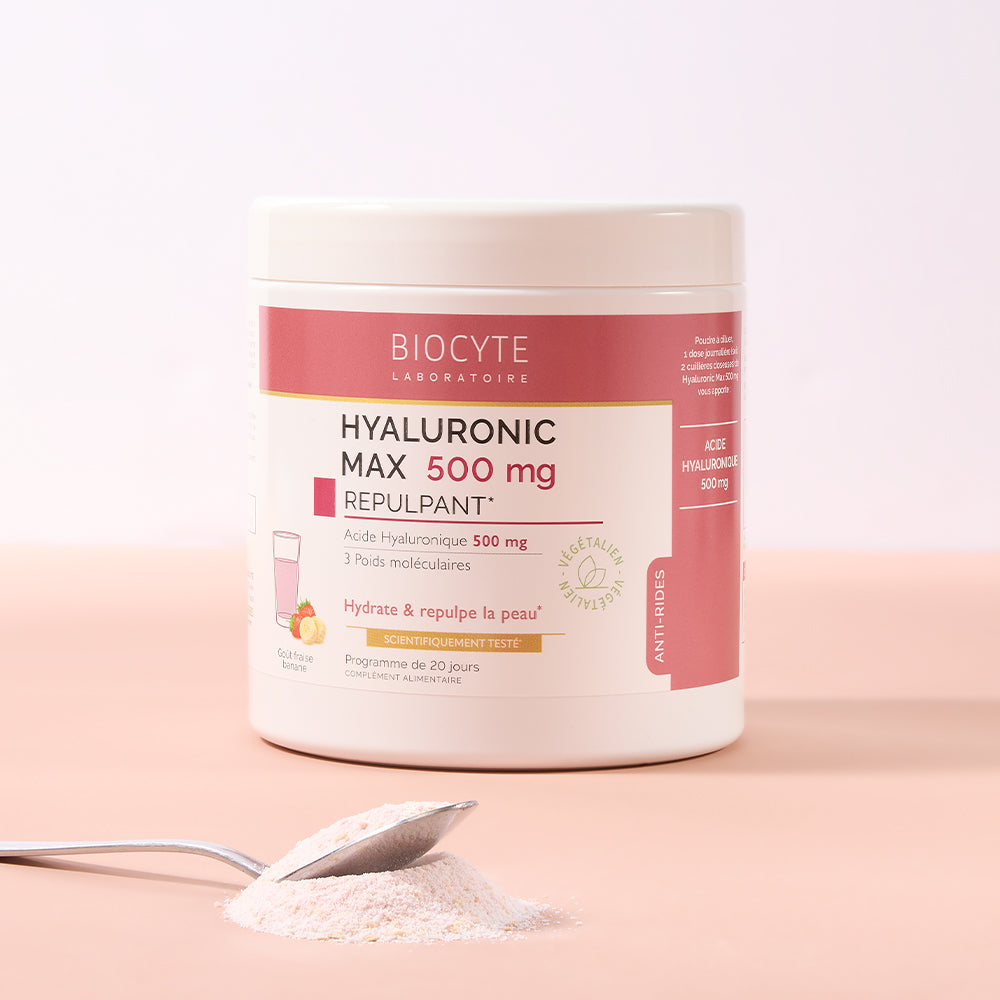
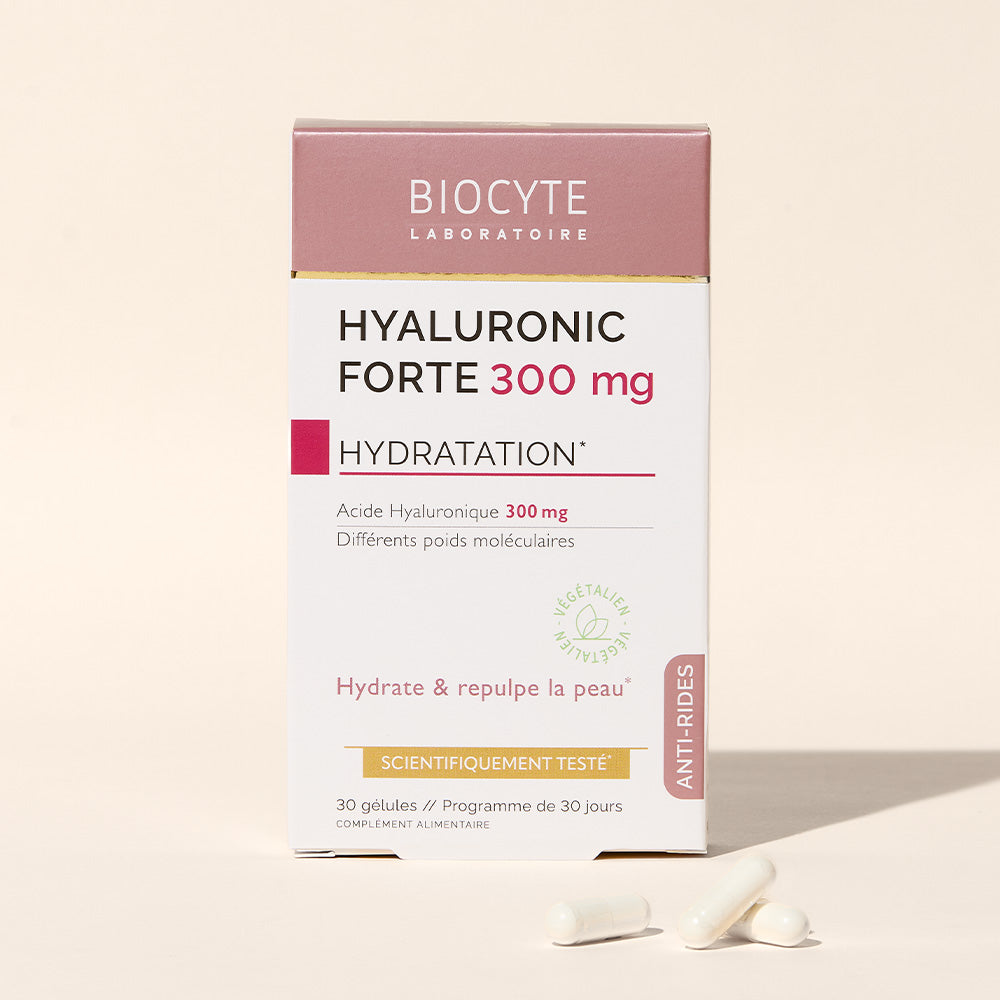
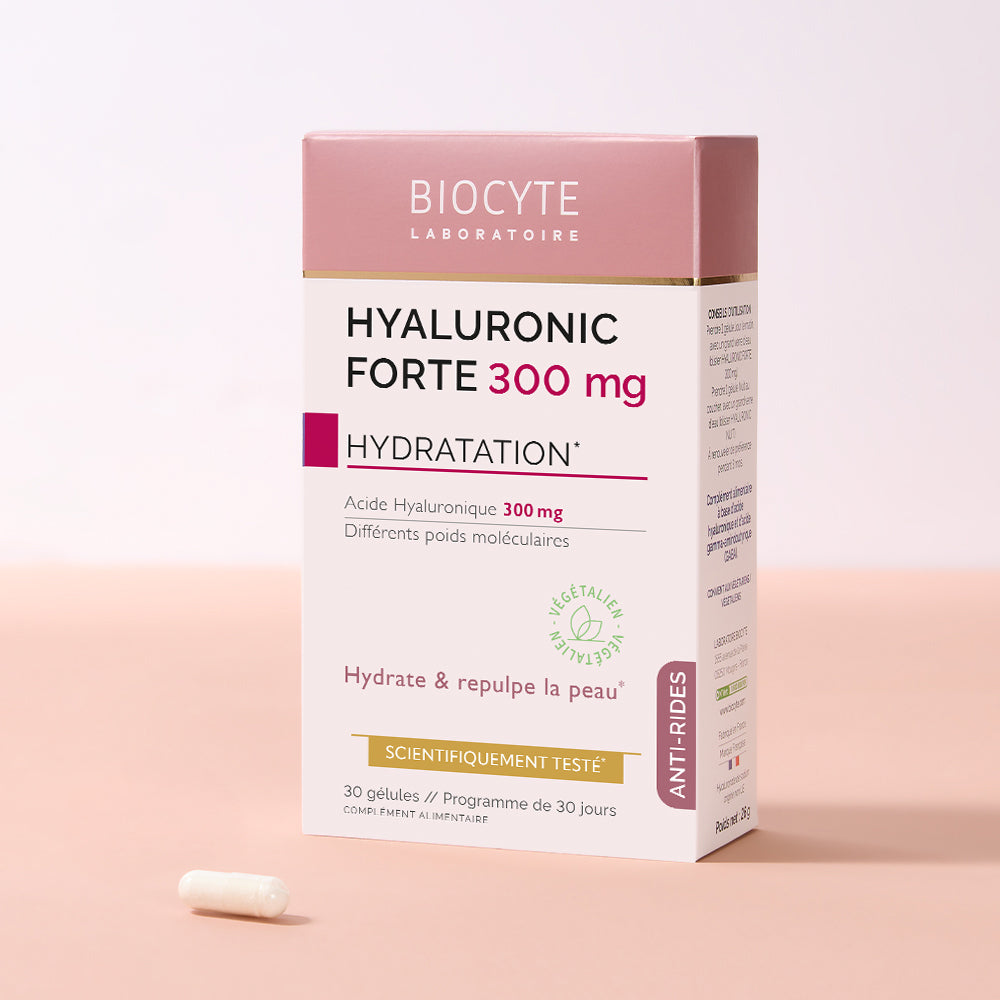
Hyaluronic acidTaken orally, hyaluronic acid
contributes to the deep hydration of the dermis. In a double-blind study conducted on 60 adults, an intake of 120 mg per day for 12 weeks improved wrinkles measured by image analysis, compared to the placebo (Oe et al., 2017). It is particularly aimed at skin whose fine lines are linked to a lack of water.
Vitamin C and skin micronutrientsVitamin C
plays a central role: it contributes to the normal formation of collagen to ensure the normal function of the skin. Zinc and biotin, for their part, contribute to maintaining normal skin. These micronutrients are often associated with collagen and hyaluronic acid, because they intervene in the same biological processes.
AntioxidantsVitamin E, polyphenols, coenzyme Q10, or carotenoids frequently complete the formulas. Their interest lies in the balance against oxidative stress, one of the drivers of skin aging
described above.
The benefit of a formula often lies in the complementarity of its actives: collagen provides the peptides, vitamin C intervenes in the formation of collagen, hyaluronic acid supports hydration, and antioxidants complete the whole.
Deep wrinkles, loss of firmness, dehydrated skin: which supplement according to your need?There is no single anti-wrinkle dietary supplement
- , but formulas adapted to the diversity of facial wrinkles and the specific needs of each skin.Fine lines and tight skin
- : lack of hydration dominates. A formula centered on hyaluronic acid, possibly combined with ceramides, is the most coherent.Loss of firmness and sagging: the density of the dermis is at stake. Hydrolyzed collagen, at an intake close to those of the studies, combined with vitamin C, constitutes the basis of anti-aging and firmness
- formulas.Deep wrinkles on mature skin
- : several mechanisms accumulate. A complete formula, combining collagen, hyaluronic acid, and antioxidants, better meets this situation, over a longer program.Exposed skin
(sun, urban environment): antioxidants take a more important place in the formula.
Age also guides the choice. From your thirties, the goal is to anticipate a targeted intake on hydration and collagen, which is often enough. Between 45 and 55 years, the hormonal transition changes the skin deeply and justifies a more complete formula.
How to choose your anti-wrinkle dietary supplement properly?
- Faced with an abundant offer, a few objective criteria allow you to distinguish a rigorous formula from a promotional product.Dosage
- : a collagen intake significantly lower than those of the studies (at least 2.5 g per day) has little chance of producing a visible effect.Quality of the peptides
- : degree of hydrolysis, molecular weight, purity, and traceability of the raw material, whatever its origin.Coherence of the formula
- : presence of vitamin C, complementarity of the actives, absence of superfluous ingredients.Galenic form
- : it determines both the possible dosage and the regularity of intake. Collagen capsules, for example, require several units per day to reach the studied intakes.Transparency
: published studies on the active, methodology, duration, number of participants.
The pharmacist's advice remains a useful benchmark for choosing an anti-wrinkle dietary supplement adapted to your skin, your age, and your lifestyle. It is, moreover, in the pharmacy, as close as possible to professional recommendation, that Biocyte was built.
Combine anti-wrinkle supplement and skincare routine for visible resultsA skin dietary supplement
acts from within; skincare products act on the surface. The two approaches do not oppose each other, they complement each other.
- In a coherent routine, we find:daily photoprotection
- , the first step to preserve collagen against UV rays;a hydrating serum
- with hyaluronic acid or vitamin C, to act on the epidermis;an evening treatment
- formulated with actives such as retinol or peptides;a favorable lifestyle
: diet rich in colorful fruits and vegetables, regular sleep, and limitation of fast sugars, which promote glycation.This "in & out" logic is at the heart of modern nutricosmetics: combining an anti-wrinkle dietary supplement with an adapted routine, such as a Korean routine


 Skin
 Hair & Nails
 Sun Care
 Slimming
 Health
 K-Biocyte
 Clinical