Every movement puts a strain on the cartilage, the tendons and ligaments, which provide cushioning and stability to the musculoskeletal system. These tissues rely on the same structural protein: collagen. With age or intensive sports practice, its renewal slows down. This explains the growing interest in collagen for joints. But it is essential to know how to choose: type of collagen, manufacturing process, studied dosage, associated nutrients. These criteria determine the consistency of a supplement with the available scientific data.
Collagen for joints: how to choose your supplement?
Collagen represents about one-third of the body's proteins. 28 types have been identified, but two are directly related to the musculoskeletal system. Type 2 collagenmakes up most of the articular cartilage matrix. Type I collagen is predominant in tendons and ligaments, as well as in bone. Collagen supplementsare therefore distinguished first by the type of collagen they provide.
Choosing collagen for joints therefore means first identifying the target tissue, then checking four criteria:
- the form of collagen: native undenatured or hydrolyzed, two technologies with very different mechanisms and dosages
- the daily dose, which must correspond to that used in clinical studies
- manufacturing quality: degree of hydrolysis, purity and traceability of the raw material
- associated nutrients, in particular vitamin C, which is essential for collagen formation
A supplement that simply states "collagen", without specifying its type, form or dosage, does not allow for an assessment of its relevance. This is the first filter to apply when looking at a range.
Native type II collagen or hydrolyzed collagen peptides: what are the differences?
These two forms share a name, but not a mode of action.
Native undenatured collagenretains the triple helix structure of the original protein. It is generally extracted from chicken sternum cartilage and used in a very low dose, about 40 mg per day. Its benefit does not lie in the supply of amino acids. Researchers describe a signaling mechanism at the level of the intestinal lymphoid tissue, called oral tolerance, which guides the way the body interacts with its own articular collagen.
A randomized double-blind placebo-controlled study (Lugo et al., 2013) followed 55 healthy adults. In these participants, 40 mg of native collagen per day for 120 days was associated with a better knee extension range of motion. Joint discomfort during exercise also appeared later.
Hydrolyzed collagenhas, on the other hand, been fragmented by enzymatic hydrolysis into low-molecular-weight collagen peptides, generally between 2,000 and 5,000 daltons. This fragmentation promotes absorption: some dipeptides, such as prolyl-hydroxyproline, are found intact in the circulation after ingestion. In vitro studies suggest that they act as signals for chondrocytes and fibroblasts, the cells that synthesize the cartilage and tendon matrix. The studied doses are significantly higher: 5 to 10 g per day.
There is also hydrolyzed type 2 collagen, which naturally contains hyaluronic acid and chondroitin derived from the original cartilage. These approaches are not mutually exclusive: some formulas combine them to cover both cartilage and peripheral connective tissues. The right collagen for joints depends above all on the target tissue and the daily intake format that is accepted.
Marine or bovine collagen: which origin to favor?
Marinecollagenis extracted from fish skin or scales. Bovine collagencomes from the skin or bones of cattle. These two sources mainly provide type I collagen, rich in glycine, proline and hydroxyproline, with very similar amino acid profiles.
Contrary to a widespread idea, origin does not determine the quality of collagen for joints on its own. Two parameters weigh much more:
- the degree of hydrolysis, which determines the size of the peptides and therefore their absorption;
- the purity and traceabilityof the raw material: control of contaminants, species of origin, extraction process.
The choice between marine collagen and bovine collagen therefore depends above all on personal criteria: dietary preferences, beliefs, sensitivity to seafood products or requirements specific to certain diets (pescatarian, halal, kosher). Native undenatured collagen, on the other hand, most often comes from chicken cartilage.
Powder, capsules or ampoules: which form of collagen to choose?
The dosage form does not change the intrinsic effectiveness of collagen. However, it determines the regularity of intake, a decisive factor since the studied effects are observed over several weeks.
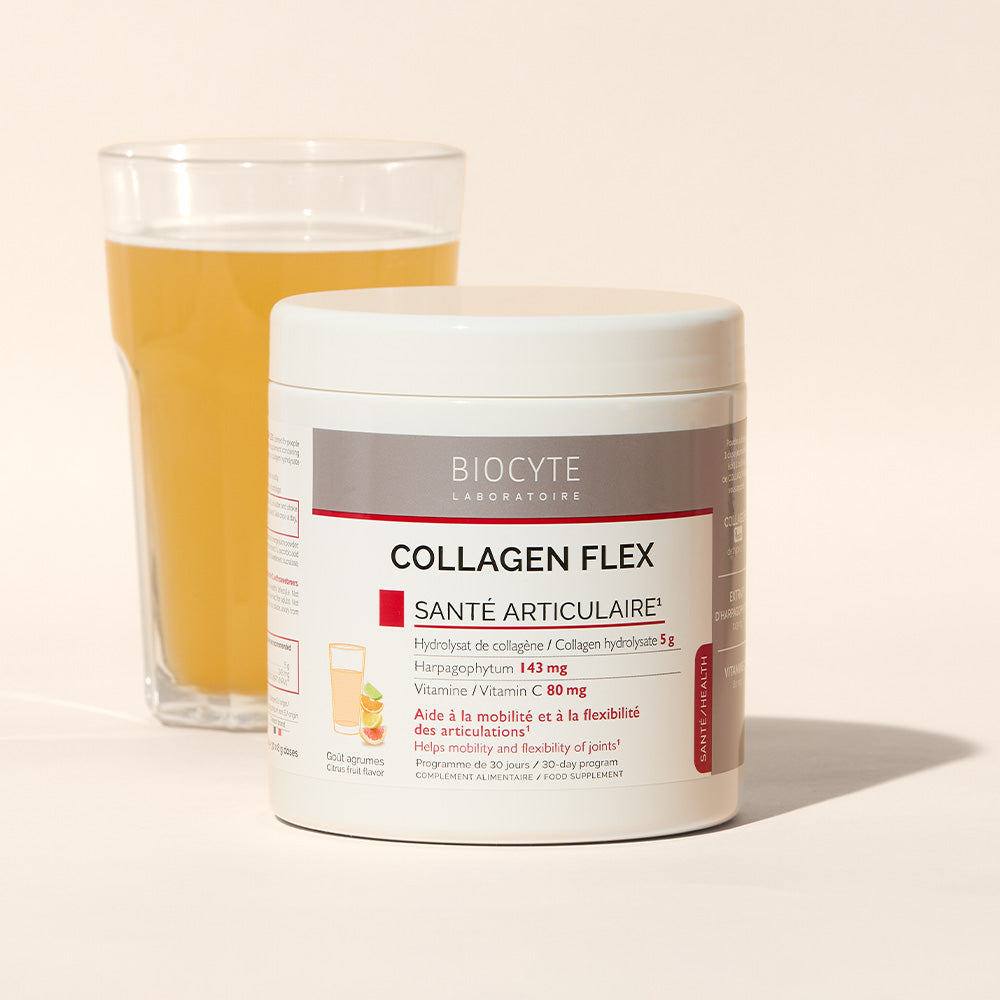
- Collagenin powderallows you to easily reach the 5 to 10 g of studied peptides. It can be diluted in water, juice or yogurt, and lends itself to formulas rich in associated nutrients.
- Capsules are perfectly suited for native collagen, active at a very low dose. For hydrolyzed collagen, however, several capsules per day are necessary to reach a significant dose.
- Liquidcollagen, in ampoules, offers a ready-to-drink format, practical when traveling, often concentrated in peptides and developed for taste.
The ideal format for collagen for joints is the one that integrates durably into the routine. A high dosage taken irregularly provides less than a studied dosage taken every day.
Vitamin C, hyaluronic acid, turmeric: the active ingredients associated with articular collagen
Collagen is rarely included alone in a formula. Several nutrients and extracts accompany it for their role in the physiology of connective tissues.
Vitamin Cis the best-documented partner. It serves as a cofactor for the enzymes that stabilize the triple helix of collagen. Above all, it has an authorized claim at the European level: vitamin C contributes to the normal formation of collagen to ensure the normal function of cartilage and bone. Collagen for joints that contains it thus relies on a solid regulatory foundation. Manganese, which contributes to the normal formation of connective tissues, often completes this duo. For formulas that do not contain it,vitamin C supplementscan accompany the intake of collagen.
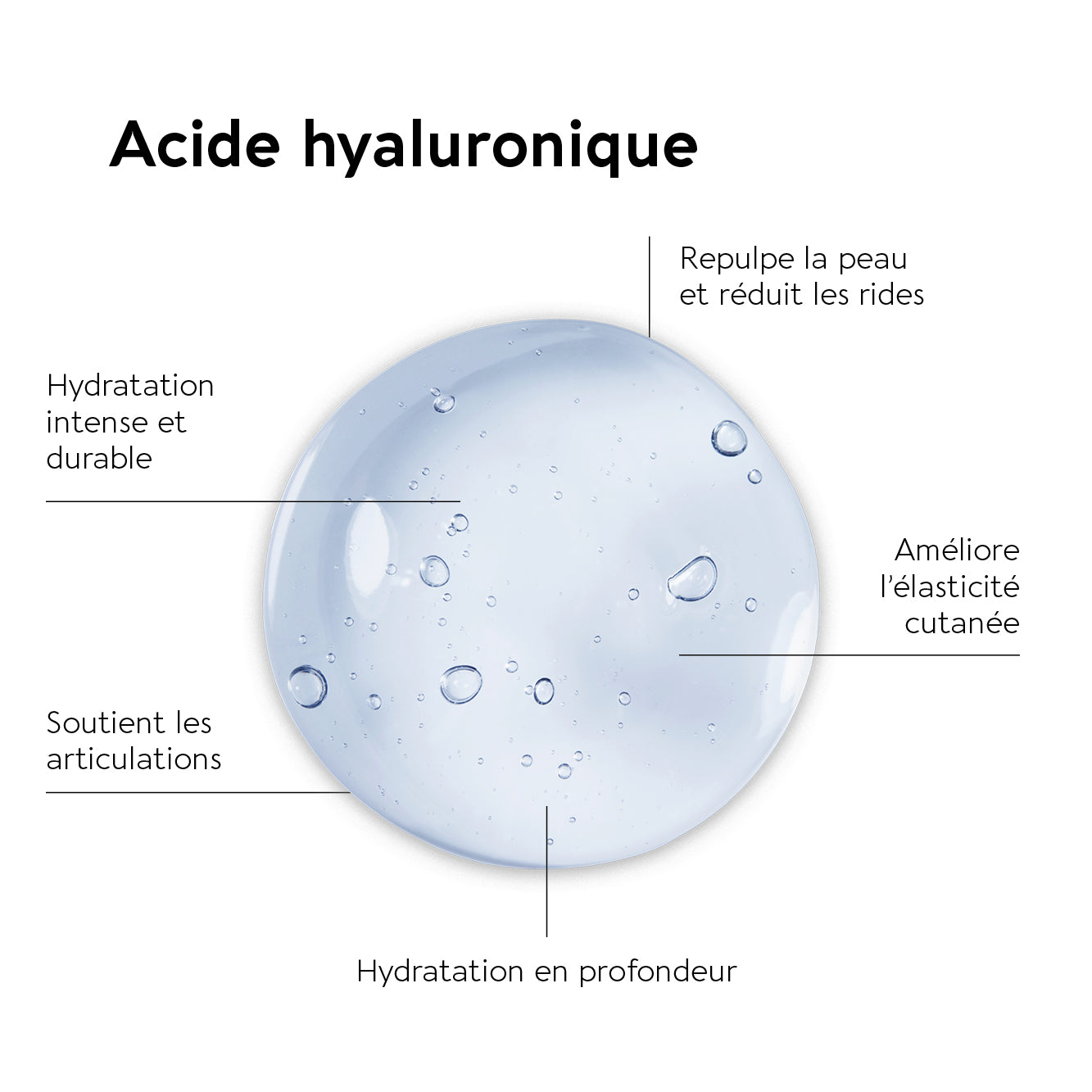
Hyaluronic acidis a natural component of synovial fluid, which lubricates the joint, and of the cartilage matrix. Oralhyaluronic acidis the subject of studies on joint mobility, with encouraging but variable results depending on the molecular weight used. Biocyte, the first French nutricosmetics laboratory and leader in oral collagen and hyaluronic acid, works precisely on the complementarity of these two structural molecules.
Glucosamine and chondroitinare constituents of the cartilage matrix, very present in joint formulas. However, they do not have any authorized health claim to date.
Turmeric, and more precisely curcumin, frequently appears in these formulas. Since its natural bioavailability is low, optimized forms have been developed: association with piperine, phospholipid complexes, micellar forms. The quality ofturmeric extractstherefore counts more than the simple presence of the ingredient.
Collagen and joints: for athletes, seniors and stressed joints
Needs vary depending on the profile, which guides the choice of collagen for joints.
In athletes, cartilage as well as tendons and ligaments undergo repeated mechanical stress. Collagen peptides have been closely studied there. A randomized placebo-controlled trial (Zdzieblik et al., 2017) was conducted in about 140 young athletes experiencing knee discomfort during exercise. Taking 5 g of specific peptides per day for 12 weeks was associated with a decrease in this discomfort. An earlier study (Clark et al., 2008), conducted over 24 weeks in 147 athletes with 10 g of hydrolyzed collagen per day, went in the same direction. Supplements for joints and musclesallow to broaden the approach to muscle recovery.
In seniors, collagen synthesis gradually decreases with age. Cartilage, a non-vascularized tissue, is also slowly renewed. The goal is then to support joint flexibilityand joint mobility daily, with formulas that often combine collagen, vitamin C and hyaluronic acid. Otherdietary supplements adapted for seniorscover the nutritional needs specific to this period of life.
For joints stressedby professional physical activity, repeated movements or prolonged standing, the logic remains the same: a studied form and dosage, taken regularly over several months.
How to take collagen for joints?
Duration and regularity are the two determining parameters. Cartilage and tendons renew slowly, and clinical studies evaluate their criteria after 3 to 6 months of daily intake, rarely before 8 weeks.
Some practical guidelines:
- respect the studied doseof the chosen form: about 40 mg for native collagen, 5 to 10 g for peptides;
- take collagen every day, at the time that is easiest to maintain: in the morning, around training or in the evening;
- plan a program of at least three months, renewable, rather than occasional intakes;
- combine a source of vitamin C, if the formula does not already contain it.
A collagen program for joints thus fits into a global approach, alongside a varied diet, sufficient hydration and adapted physical activity.


 Skin
 Hair & Nails
 Sun Care
 Slimming
 Health
 K-Biocyte
 Clinical