 Skin
Skin Hair & Nails
 Sun Care
 Slimming
 Health

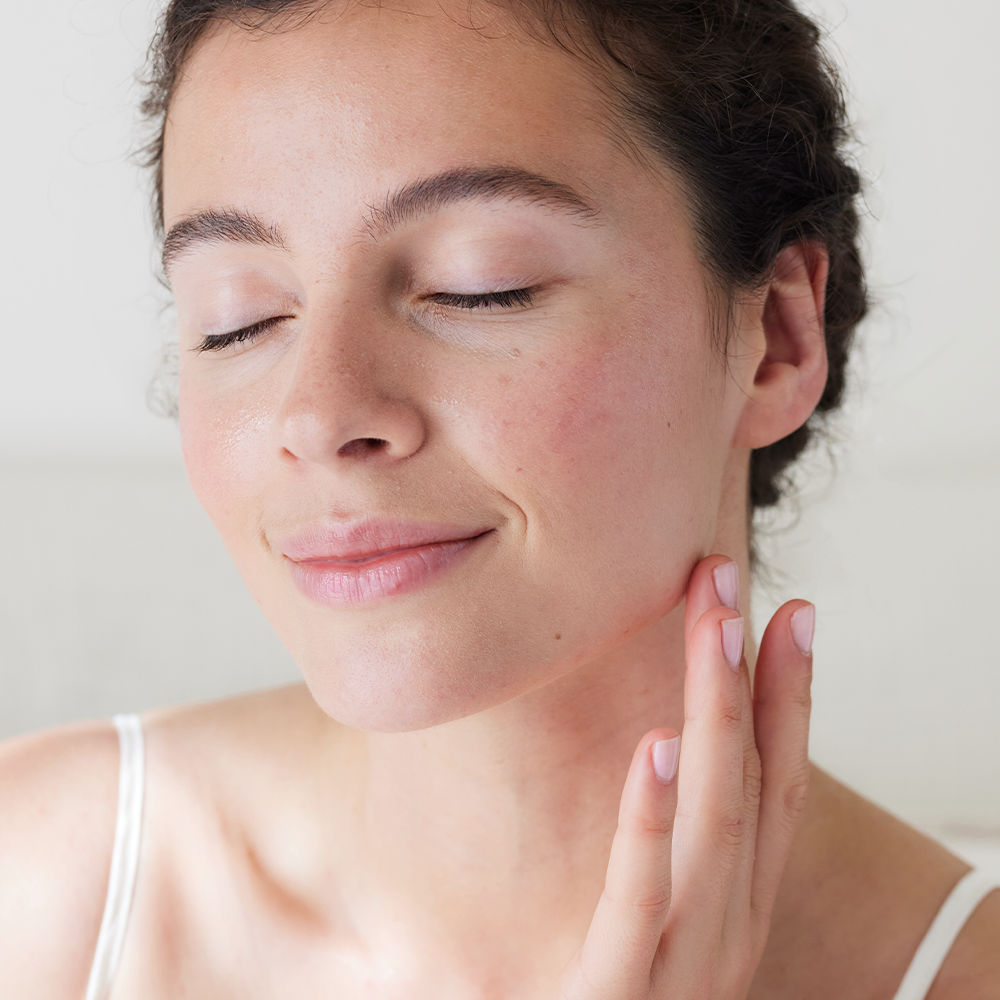
How to achieve lasting Glass Skin?
Key takeaways
Glass skin refers to translucent, luminous, and perfectly hydrated skin—the visible expression of functionally healthy skin, not an aesthetic standard.
Achieving lasting glass skin relies on four biological mechanisms: dermal hydration, collagen density, skin barrier integrity, and microrelief uniformity.
A topical K-Beauty routine is essential but insufficient on its own: it does not act on the deep structural quality of the skin.
The inside-out beauty approach with collagen, oral hyaluronic acid, vitamin C, and zinc complements the topical routine by acting on internal mechanisms.
First results appear between 3 and 6 weeks, with structural consolidation over 2 to 3 months.
Glass skin, literally "glassy skin" or "mirror skin," is one of the most sought-after beauty ideals: translucent, luminous skin, so hydrated and dense that it seems to reflect light like polished glass. Born from the Korean routine, this K-Beauty trend has crossed borders because it is based on something fundamentally biological and therefore achievable.
Achieving lasting glass skin is not just about a topical routine, however rigorous it may be. It involves acting simultaneously on the surface and in depth: targeted care to prepare and protect the epidermis, and oral active ingredients to rebuild dermal structures and protect cells that creams cannot reach, such as glutathione, pomegranate extract, and rice extract for radiance and even skin tone, collagen, hyaluronic acid, and vitamin C for density and hydration. It is this inside-out beauty logic, combining nutricosmetics and skincare, that allows for visible and lasting glass skin.
SUMMARY
What is glass skin?
Glass skin is much more than a beauty trend: it's the visible expression of healthy skin. Understanding what it truly is is the first step to knowing how to achieve it.
Definition: translucent, luminous skin, without imperfections
Glass skin refers to skin whose surface is so regular and hydrated that it appears translucent. Uniform microrelief, homogeneous light reflection, absence of dilated pores, spots, or dull areas: it's not a makeup effect, it's the state of functionally healthy skin. Luminous skin is not just an effect, it's a state.
K-Beauty origins and why this trend has lasted
Glass skin originated from Korean beauty standards, driven by the K-Beauty routine, which is a multi-step skincare system focused on intense hydration and daily protection. If this trend has lasted where others have disappeared, it's because it is based on genuinely proven practices: deep skin hydration, progressive layering, daily SPF. It corresponds to documented cutaneous mechanisms, not a superficial fad.
Glass skin vs. dewy skin vs. no-makeup makeup: the real differences
Glass skin is distinguished by its translucence and density: light reflects uniformly on smooth, blemish-free skin. Three trends often confused, but which denote very different realities:
- Glass skin: translucent, dense, and uniform skin, achieved through deep biological action. No surface effect: it's the state of functionally healthy skin, visible to the naked eye.
- Dewy skin: a light, ethereal glow effect, often achieved with luminous topical products or mists. Immediate aesthetic, but without action on the intrinsic quality of the skin.
- No-makeup makeup: a minimal makeup result that mimics the absence of product. No connection to real skin health.
Glass skin cannot be simulated; it is built biologically.
The biological mechanisms behind glass skin
To achieve lasting glass skin, four biological parameters are crucial.
Skin hydration: the role of endogenous hyaluronic acid
Hyaluronic acid naturally present in the dermis can retain up to a thousand times its weight in water, maintaining tissue volume and plumpness. From the age of 25, its production gradually decreases, leading to less dense, less luminous skin with a less regular microrelief. Thus, deep skin hydration primarily depends on the quality of the dermal matrix, not just on creams applied to the surface.
Dermal density: collagen and extracellular matrix
Skin collagen accounts for 70% of the dry mass of the dermis. It gives the skin its thickness, firmness, and that dense, luminous appearance characteristic of glass skin. Its synthesis slows by about 1% per year from the age of 25 and accelerates under the effect of UV, oxidative stress, or tobacco, leading to a visible loss of density on the surface.
Radiance and even skin tone: oxidative stress and melanogenesis
Beyond structure, skin radiance depends on a second, often underestimated mechanism: oxidative stress. Free radicals generated by UV rays, pollution, and metabolic stress alter keratinocytes on the surface, dull the complexion, and activate melanogenesis, the production of melanin responsible for pigmented irregularities. An organism well-protected against oxidative stress naturally exhibits more even, luminous skin, closer to the desired glass skin effect. It is precisely on this mechanism that oral antioxidant active ingredients such as glutathione and pomegranate extract act.
Skin barrier: ceramides, lipids, and TEWL
The skin barrier, composed of ceramides, fatty acids, and cholesterol, limits transepidermal water loss (TEWL*). A compromised barrier allows moisture to escape from the superficial layers, making the skin dull and uncomfortable. For glass skin, its integrity is fundamental: without it, no active ingredient can sustainably maintain the necessary level of hydration and density.
* TEWL = TransEpidermal Water Loss
![Clickable banner with a woman with radiant skin and indications on K-Beauty]()
Topical glass skin routine: the steps that really matter
The K-Beauty routine is the essential topical foundation. Each step addresses a specific mechanism.
Double cleansing: why and how
Double cleansing combines an oil cleanser that dissolves sebum, makeup, and pollutants, and a gentle water-based cleanser to remove residues without altering the hydrolipidic film. The result: clean skin, ready to absorb the active ingredients that follow. For sensitive skin, micellar water is an excellent substitute for the first oil cleanse.
And for optimal application, the Beauty Set, including a headband and wristbands, keeps hair out of the way and protects clothing during cleansing and subsequent treatments.
Gentle exfoliation: fruit acids, enzymes, frequency according to skin type
Gentle chemical exfoliation, such as AHAs like glycolic acid, or plant enzymes like papain, dissolves dead cells on the surface without friction, refining skin texture and improving complexion radiance. Recommended frequency: once or twice a week for normal to combination skin, daily use for dry or sensitive skin.
The Exfoliating Toner Pads from the K-Biocyte range combine gentle chemical exfoliation and toning in a single step; a practical solution to refine skin texture without harming the skin barrier.
To complement this step, the Bio Collagen Mask from the K-Biocyte range offers intense moisturizing and plumping action, to be used as an occasional treatment after cleansing.
Hydrating layering: essence, serum, ampoule
Layering involves applying products from thinnest to thickest to maximize their penetration. Essence prepares and hydrates, serum delivers targeted active ingredients, and ampoule intensifies as a temporary treatment. Hyaluronic acid serum, applied to slightly damp skin, captures surface water to keep it in the superficial layers of the epidermis.
Key topical active ingredients: hyaluronic acid, niacinamide, vitamin C, ceramides
Four active ingredients form the core of an effective glass skin routine:
-
Hyaluronic acid in multiple molecular weights hydrates on the surface and in depth
-
Niacinamide regulates sebum, evens out skin tone, and strengthens the barrier
-
Vitamin C neutralizes free radicals and improves complexion radiance
-
Ceramides restore the lipid barrier and limit water loss
For blemish-prone skin, the Active Pimple Patch from the new K-Biocyte range allows for local treatment without disrupting the rest of the routine, thus preserving the even complexion essential for glass skin.
SPF: the non-negotiable step
UVA rays degrade collagen fibers in depth; UVB rays stimulate melanogenesis and compromise skin tone evenness. A SPF 50+ applied every morning protects dermal structures and preserves the benefits of the entire routine. It is the simplest and most often neglected step.
Glass skin is not simulated, it is built biologically
The limit of skincare alone: why inside-out is essential
Topical routine is essential, but it quickly reaches its biological limits. To go further and build lasting glass skin, it is necessary to act at a level that external care cannot reach: from within.
What the skin cannot receive topically
The skin barrier also limits the penetration of topical active ingredients. High molecular weight molecules like collagen or hyaluronic acid do not cross it in significant quantities. Surface treatments can neither restore collagen capital nor stimulate endogenous hyaluronic acid synthesis in depth. This is the structural limit of an exclusively external approach.
Oral bioavailability of structural active ingredients
Orally, active ingredients reach the dermis systemically. Hydrolyzed collagen, fragmented into small absorbable peptides, is found in the bloodstream after ingestion, then distributed to the skin where it stimulates fibroblasts. Oral hyaluronic acid generates metabolites that activate the endogenous production of HA in the dermis. The oral route acts where the topical route cannot go.
The nutricosmetic approach: acting on deep mechanisms
Inside-out beauty is based on a biologically coherent principle: the visible quality of the skin reflects its internal balance. Acting on collagen synthesis, water retention, and cellular oxidative protection means building glass skin that does not depend on surface effects and lasts.
The inside glass skin protocol: oral active ingredients to target
The inside-out beauty approach is based on two complementary logics: rebuilding the deep structures of the skin, and protecting and illuminating from within. These two axes correspond to two families of active ingredients with distinct mechanisms.
Structural active ingredients: rebuilding density and hydration
Structural active ingredients act deeply on the dermal matrix, where topical treatments cannot intervene. Collagen, hyaluronic acid, vitamin C, niacinamide, zinc, and selenium form the biological foundations of lasting glass skin.
Hydrolyzed collagen: structure, bioavailability, clinical dosage
Hydrolyzed collagen is fragmented into small peptides absorbable by the intestine. What determines its effectiveness is not its origin, marine or bovine, but the quality of hydrolysis and the purity of the raw material. Randomized double-blind clinical studies have documented, at 2.5 to 10 g per day over 8 to 12 weeks, a significant improvement in skin hydration, elasticity, and density (Proksch et al., 2014; Bolke et al., 2019). These peptides also stimulate the production of elastin and hyaluronic acid by fibroblasts, a synergy of action directly linked to glass skin (Asserin et al., 2015). Biocyte, a pioneer of oral collagen in France since 2016, has developed recognized expertise in these formulations with high bioavailability.
Oral hyaluronic acid: mechanism and clinical evidence
Oral hyaluronic acid is the active ingredient most directly linked to deep skin hydration. Clinical studies show that supplementation of 120 to 240 mg per day over 12 weeks significantly increases skin HA levels, improves hydration measured by corneometry, and reduces skin dryness (Kawada et al., 2015). Its metabolites stimulate fibroblasts and keratinocytes to produce more endogenous hyaluronic acid, thus amplifying the dermal water retention capacity.
Vitamin C: collagen synthesis cofactor and radiance
Vitamin C is essential for the maturation of collagen fibers: without it, collagen synthesis is compromised, regardless of the supplementation level. A powerful antioxidant, it also protects dermal structures against UV and pollution. Its action on complexion radiance is through the inhibition of tyrosinase (a key enzyme in melanogenesis) contributing to evening out skin tone and improving overall luminosity.
Niacinamide: even skin tone, sebum regulation, barrier
Niacinamide (vitamin B3) orally participates in the synthesis of NAD+, an essential coenzyme for cellular repair in keratinocytes. It modulates melanin transfer to surface cells, evening out skin tone, and supports the synthesis of epidermal ceramides, strengthening the skin barrier and limiting TEWL. A versatile active ingredient, directly useful for building luminous skin.
Zinc and selenium: oxidative protection and cell renewal
Zinc is involved in cell proliferation, protein synthesis, and the regulation of skin inflammation. Selenium protects keratinocytes and fibroblasts from oxidative stress via glutathione peroxidases. These two micronutrients, often insufficient in modern diets, form the basis of a skin supplement to preserve cell integrity while maintaining glass skin over time.
Antioxidant and illuminating active ingredients: protecting and revealing radiance
These active ingredients form the core of the K-Biocyte range's Glass Skin formula, designed to act on complexion evenness and luminosity from within.
Glutathione: cellular antioxidant and complexion evenness
Glutathione is one of the most powerful antioxidants naturally produced by the body. It neutralizes free radicals in cells, limiting oxidative damage that alters skin quality and compromises complexion radiance. Its role in complexion evenness is also documented: it inhibits tyrosinase, an enzyme involved in melanin production, thus helping to reduce pigment irregularities. With age and under the effect of oxidative stress, endogenous glutathione levels decrease, justifying oral intake to maintain this level of cellular protection.
Pomegranate extract: oxidative protection and radiance
Rich in polyphenols, pomegranate extract is one of the best-documented plant active ingredients for skin protection. Its powerful antioxidant activity neutralizes free radicals generated by UV and pollution, preserving the integrity of dermal structures and contributing to complexion radiance. Its active compounds act on complexion evenness in synergy with glutathione, reinforcing the formula's overall cellular protection, a particularly relevant duo for building luminous, lasting skin.
Rice extract: softness, luminosity, and micro-relief
Rice extract, particularly its fermented derivatives, emblematic of the K-Beauty routine, is recognized for its soothing and illuminating properties. Rich in ceramides, essential lipids for the skin barrier, it helps improve complexion evenness, soothe sensitive skin, and refine skin micro-relief. Taken orally, its bioactive compounds support epidermal cell renewal, which is a direct lever for complexion radiance and the quality of glass skin.
![Bannière cliquable avec un visage coupé d]()
Glass Skin FAQ
Is glass skin achievable for all skin types?
Yes. Glass skin is not reserved for a specific skin type; it's the expression of functionally healthy skin. Oily skin works on sebum regulation, dry skin on hydration and barrier function, and mature skin on density and collagen. The inside-out beauty approach precisely adapts to each skin's mechanisms.
Are dietary supplements really effective for achieving glass skin?
Yes, for the best-documented active ingredients. A review published in Frontiers in Nutrition (2023) covering 66 clinical studies concluded significant improvements in hydration, elasticity, and density for formulas based on hydrolyzed collagen and hyaluronic acid. Efficacy depends on formulation quality, dosage, and consistent intake.
How long does it take to achieve the glass skin effect?
Initial improvements such as hydration, complexion radiance, and skin comfort appear between 3 and 6 weeks. Structural effects on density and micro-relief consolidate over 2 to 3 months. Lasting glass skin is built over time, which distinguishes it from a superficial effect.
What is the difference between hyaluronic acid in cream and in a dietary supplement?
Topical hyaluronic acid serum acts on the surface: immediate plumping effect, limitation of TEWL. Oral hyaluronic acid acts deeply: it stimulates endogenous HA production in the dermis in the long term. The two are complementary; one acts quickly on the surface, the other builds durably in depth.
Is the K-beauty glass skin routine effective or just marketing?
The K-Beauty routine is based on genuinely proven practices: double cleansing, layering, hyaluronic acid serum, SPF. These steps correspond to documented skin mechanisms. Their limit: they do not address the deep structural quality of the skin. This is where nutricosmetics comes in, as an indispensable complement.
Can a topical routine and dietary supplements be combined for glass skin?
This is the most effective approach. Topical treatments act on the surface; oral active ingredients act on deep structures. One amplifies the other according to an inside-out beauty logic, and this synergy allows for visible and lasting glass skin.
Is glass skin suitable for mature skin?
Yes, mature skin has precisely lost the collagen density and water retention capacity that define glass skin, making it the ideal target for a combined nutricosmetic approach. If pregnant or breastfeeding, it is important to seek advice from a healthcare professional before any supplementation.
Sources
- Proksch E. et al. — Oral Supplementation of Specific Collagen Peptides Has Beneficial Effects on Human Skin Physiology. Skin Pharmacology and Physiology, 2014.
- Kawada C. et al. — Ingestion of hyaluronans improves dry skin conditions: a randomized, double blind, controlled study. Journal of Clinical Biochemistry and Nutrition, 2015.
- Bolke L. et al. — A Collagen Supplement Improves Skin Hydration, Elasticity, Roughness, and Density. Nutrients, 2019.
- Vollmer D.L. et al. — Enhancing Skin Health by Oral Administration of Natural Compounds and Minerals. International Journal of Molecular Sciences, 2018.
- Michalak M. et al. — Bioactive Compounds for Skin Health: A Review. Nutrients, 2021.
- De Miranda R.B. et al. — Effects of hydrolyzed collagen supplementation on skin aging — a systematic review and meta-analysis. International Journal of Dermatology, 2021.
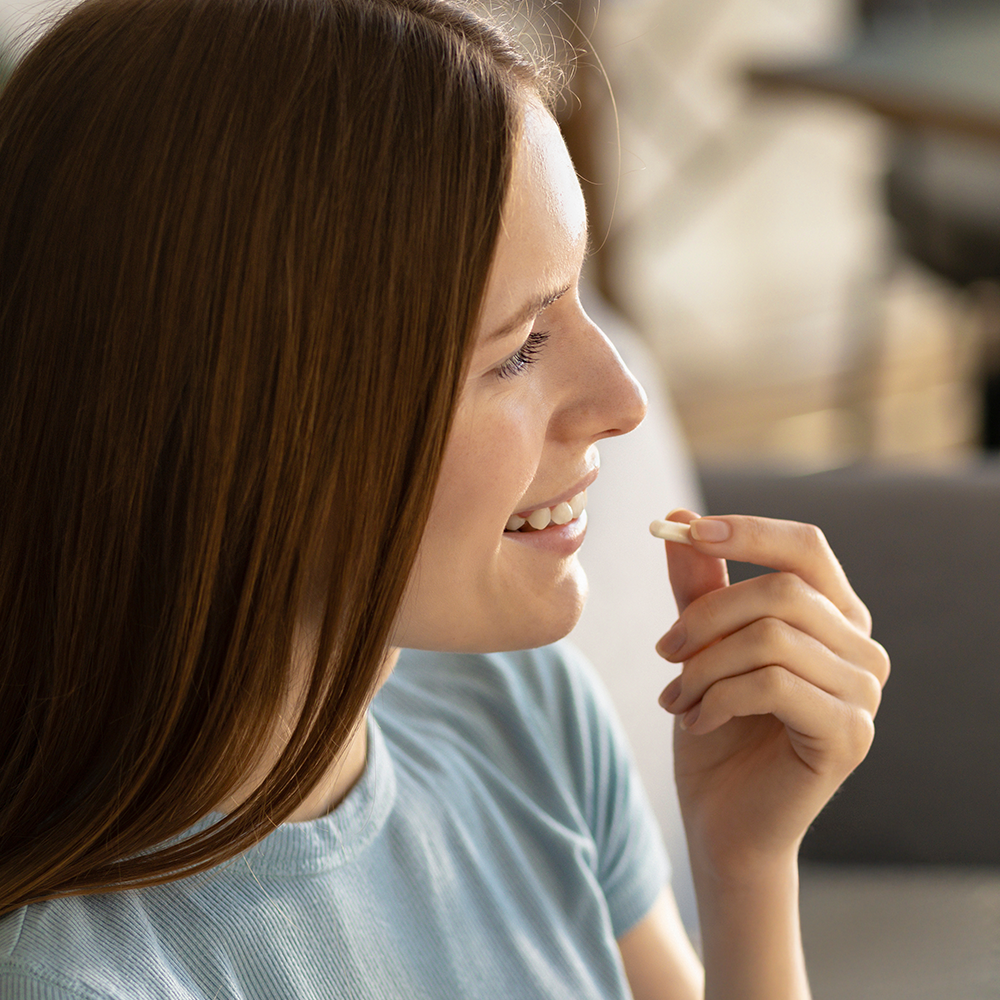
![Femme souriante en train de prendre un complément alimentaire]()
![Femme souriante en train de prendre un complément alimentaire]()
The skin barrier, composed of ceramides, fatty acids, and cholesterol, limits transepidermal water loss (TEWL*). A compromised barrier allows moisture to escape from the superficial layers, making the skin dull and uncomfortable. For glass skin, its integrity is fundamental: without it, no active ingredient can sustainably maintain the necessary level of hydration and density.
* TEWL = TransEpidermal Water Loss

The K-Beauty routine is the essential topical foundation. Each step addresses a specific mechanism.
Double cleansing combines an oil cleanser that dissolves sebum, makeup, and pollutants, and a gentle water-based cleanser to remove residues without altering the hydrolipidic film. The result: clean skin, ready to absorb the active ingredients that follow. For sensitive skin, micellar water is an excellent substitute for the first oil cleanse.
And for optimal application, the Beauty Set, including a headband and wristbands, keeps hair out of the way and protects clothing during cleansing and subsequent treatments.
Gentle chemical exfoliation, such as AHAs like glycolic acid, or plant enzymes like papain, dissolves dead cells on the surface without friction, refining skin texture and improving complexion radiance. Recommended frequency: once or twice a week for normal to combination skin, daily use for dry or sensitive skin.
The Exfoliating Toner Pads from the K-Biocyte range combine gentle chemical exfoliation and toning in a single step; a practical solution to refine skin texture without harming the skin barrier.
To complement this step, the Bio Collagen Mask from the K-Biocyte range offers intense moisturizing and plumping action, to be used as an occasional treatment after cleansing.
Layering involves applying products from thinnest to thickest to maximize their penetration. Essence prepares and hydrates, serum delivers targeted active ingredients, and ampoule intensifies as a temporary treatment. Hyaluronic acid serum, applied to slightly damp skin, captures surface water to keep it in the superficial layers of the epidermis.
Four active ingredients form the core of an effective glass skin routine:
- Hyaluronic acid in multiple molecular weights hydrates on the surface and in depth
- Niacinamide regulates sebum, evens out skin tone, and strengthens the barrier
- Vitamin C neutralizes free radicals and improves complexion radiance
- Ceramides restore the lipid barrier and limit water loss
For blemish-prone skin, the Active Pimple Patch from the new K-Biocyte range allows for local treatment without disrupting the rest of the routine, thus preserving the even complexion essential for glass skin.
UVA rays degrade collagen fibers in depth; UVB rays stimulate melanogenesis and compromise skin tone evenness. A SPF 50+ applied every morning protects dermal structures and preserves the benefits of the entire routine. It is the simplest and most often neglected step.
Glass skin is not simulated, it is built biologically
Topical routine is essential, but it quickly reaches its biological limits. To go further and build lasting glass skin, it is necessary to act at a level that external care cannot reach: from within.
The skin barrier also limits the penetration of topical active ingredients. High molecular weight molecules like collagen or hyaluronic acid do not cross it in significant quantities. Surface treatments can neither restore collagen capital nor stimulate endogenous hyaluronic acid synthesis in depth. This is the structural limit of an exclusively external approach.
Orally, active ingredients reach the dermis systemically. Hydrolyzed collagen, fragmented into small absorbable peptides, is found in the bloodstream after ingestion, then distributed to the skin where it stimulates fibroblasts. Oral hyaluronic acid generates metabolites that activate the endogenous production of HA in the dermis. The oral route acts where the topical route cannot go.
Inside-out beauty is based on a biologically coherent principle: the visible quality of the skin reflects its internal balance. Acting on collagen synthesis, water retention, and cellular oxidative protection means building glass skin that does not depend on surface effects and lasts.
The inside-out beauty approach is based on two complementary logics: rebuilding the deep structures of the skin, and protecting and illuminating from within. These two axes correspond to two families of active ingredients with distinct mechanisms.
Structural active ingredients act deeply on the dermal matrix, where topical treatments cannot intervene. Collagen, hyaluronic acid, vitamin C, niacinamide, zinc, and selenium form the biological foundations of lasting glass skin.
Hydrolyzed collagen is fragmented into small peptides absorbable by the intestine. What determines its effectiveness is not its origin, marine or bovine, but the quality of hydrolysis and the purity of the raw material. Randomized double-blind clinical studies have documented, at 2.5 to 10 g per day over 8 to 12 weeks, a significant improvement in skin hydration, elasticity, and density (Proksch et al., 2014; Bolke et al., 2019). These peptides also stimulate the production of elastin and hyaluronic acid by fibroblasts, a synergy of action directly linked to glass skin (Asserin et al., 2015). Biocyte, a pioneer of oral collagen in France since 2016, has developed recognized expertise in these formulations with high bioavailability.
Oral hyaluronic acid is the active ingredient most directly linked to deep skin hydration. Clinical studies show that supplementation of 120 to 240 mg per day over 12 weeks significantly increases skin HA levels, improves hydration measured by corneometry, and reduces skin dryness (Kawada et al., 2015). Its metabolites stimulate fibroblasts and keratinocytes to produce more endogenous hyaluronic acid, thus amplifying the dermal water retention capacity.
Vitamin C is essential for the maturation of collagen fibers: without it, collagen synthesis is compromised, regardless of the supplementation level. A powerful antioxidant, it also protects dermal structures against UV and pollution. Its action on complexion radiance is through the inhibition of tyrosinase (a key enzyme in melanogenesis) contributing to evening out skin tone and improving overall luminosity.
Niacinamide (vitamin B3) orally participates in the synthesis of NAD+, an essential coenzyme for cellular repair in keratinocytes. It modulates melanin transfer to surface cells, evening out skin tone, and supports the synthesis of epidermal ceramides, strengthening the skin barrier and limiting TEWL. A versatile active ingredient, directly useful for building luminous skin.
Zinc is involved in cell proliferation, protein synthesis, and the regulation of skin inflammation. Selenium protects keratinocytes and fibroblasts from oxidative stress via glutathione peroxidases. These two micronutrients, often insufficient in modern diets, form the basis of a skin supplement to preserve cell integrity while maintaining glass skin over time.
These active ingredients form the core of the K-Biocyte range's Glass Skin formula, designed to act on complexion evenness and luminosity from within.
Glutathione is one of the most powerful antioxidants naturally produced by the body. It neutralizes free radicals in cells, limiting oxidative damage that alters skin quality and compromises complexion radiance. Its role in complexion evenness is also documented: it inhibits tyrosinase, an enzyme involved in melanin production, thus helping to reduce pigment irregularities. With age and under the effect of oxidative stress, endogenous glutathione levels decrease, justifying oral intake to maintain this level of cellular protection.
Rich in polyphenols, pomegranate extract is one of the best-documented plant active ingredients for skin protection. Its powerful antioxidant activity neutralizes free radicals generated by UV and pollution, preserving the integrity of dermal structures and contributing to complexion radiance. Its active compounds act on complexion evenness in synergy with glutathione, reinforcing the formula's overall cellular protection, a particularly relevant duo for building luminous, lasting skin.
Rice extract, particularly its fermented derivatives, emblematic of the K-Beauty routine, is recognized for its soothing and illuminating properties. Rich in ceramides, essential lipids for the skin barrier, it helps improve complexion evenness, soothe sensitive skin, and refine skin micro-relief. Taken orally, its bioactive compounds support epidermal cell renewal, which is a direct lever for complexion radiance and the quality of glass skin.

Is glass skin achievable for all skin types?
Yes. Glass skin is not reserved for a specific skin type; it's the expression of functionally healthy skin. Oily skin works on sebum regulation, dry skin on hydration and barrier function, and mature skin on density and collagen. The inside-out beauty approach precisely adapts to each skin's mechanisms.
Are dietary supplements really effective for achieving glass skin?
Yes, for the best-documented active ingredients. A review published in Frontiers in Nutrition (2023) covering 66 clinical studies concluded significant improvements in hydration, elasticity, and density for formulas based on hydrolyzed collagen and hyaluronic acid. Efficacy depends on formulation quality, dosage, and consistent intake.
How long does it take to achieve the glass skin effect?
Initial improvements such as hydration, complexion radiance, and skin comfort appear between 3 and 6 weeks. Structural effects on density and micro-relief consolidate over 2 to 3 months. Lasting glass skin is built over time, which distinguishes it from a superficial effect.
What is the difference between hyaluronic acid in cream and in a dietary supplement?
Topical hyaluronic acid serum acts on the surface: immediate plumping effect, limitation of TEWL. Oral hyaluronic acid acts deeply: it stimulates endogenous HA production in the dermis in the long term. The two are complementary; one acts quickly on the surface, the other builds durably in depth.
Is the K-beauty glass skin routine effective or just marketing?
The K-Beauty routine is based on genuinely proven practices: double cleansing, layering, hyaluronic acid serum, SPF. These steps correspond to documented skin mechanisms. Their limit: they do not address the deep structural quality of the skin. This is where nutricosmetics comes in, as an indispensable complement.
Can a topical routine and dietary supplements be combined for glass skin?
This is the most effective approach. Topical treatments act on the surface; oral active ingredients act on deep structures. One amplifies the other according to an inside-out beauty logic, and this synergy allows for visible and lasting glass skin.
Is glass skin suitable for mature skin?
Yes, mature skin has precisely lost the collagen density and water retention capacity that define glass skin, making it the ideal target for a combined nutricosmetic approach. If pregnant or breastfeeding, it is important to seek advice from a healthcare professional before any supplementation.
- Proksch E. et al. — Oral Supplementation of Specific Collagen Peptides Has Beneficial Effects on Human Skin Physiology. Skin Pharmacology and Physiology, 2014.
- Kawada C. et al. — Ingestion of hyaluronans improves dry skin conditions: a randomized, double blind, controlled study. Journal of Clinical Biochemistry and Nutrition, 2015.
- Bolke L. et al. — A Collagen Supplement Improves Skin Hydration, Elasticity, Roughness, and Density. Nutrients, 2019.
- Vollmer D.L. et al. — Enhancing Skin Health by Oral Administration of Natural Compounds and Minerals. International Journal of Molecular Sciences, 2018.
- Michalak M. et al. — Bioactive Compounds for Skin Health: A Review. Nutrients, 2021.
- De Miranda R.B. et al. — Effects of hydrolyzed collagen supplementation on skin aging — a systematic review and meta-analysis. International Journal of Dermatology, 2021.